

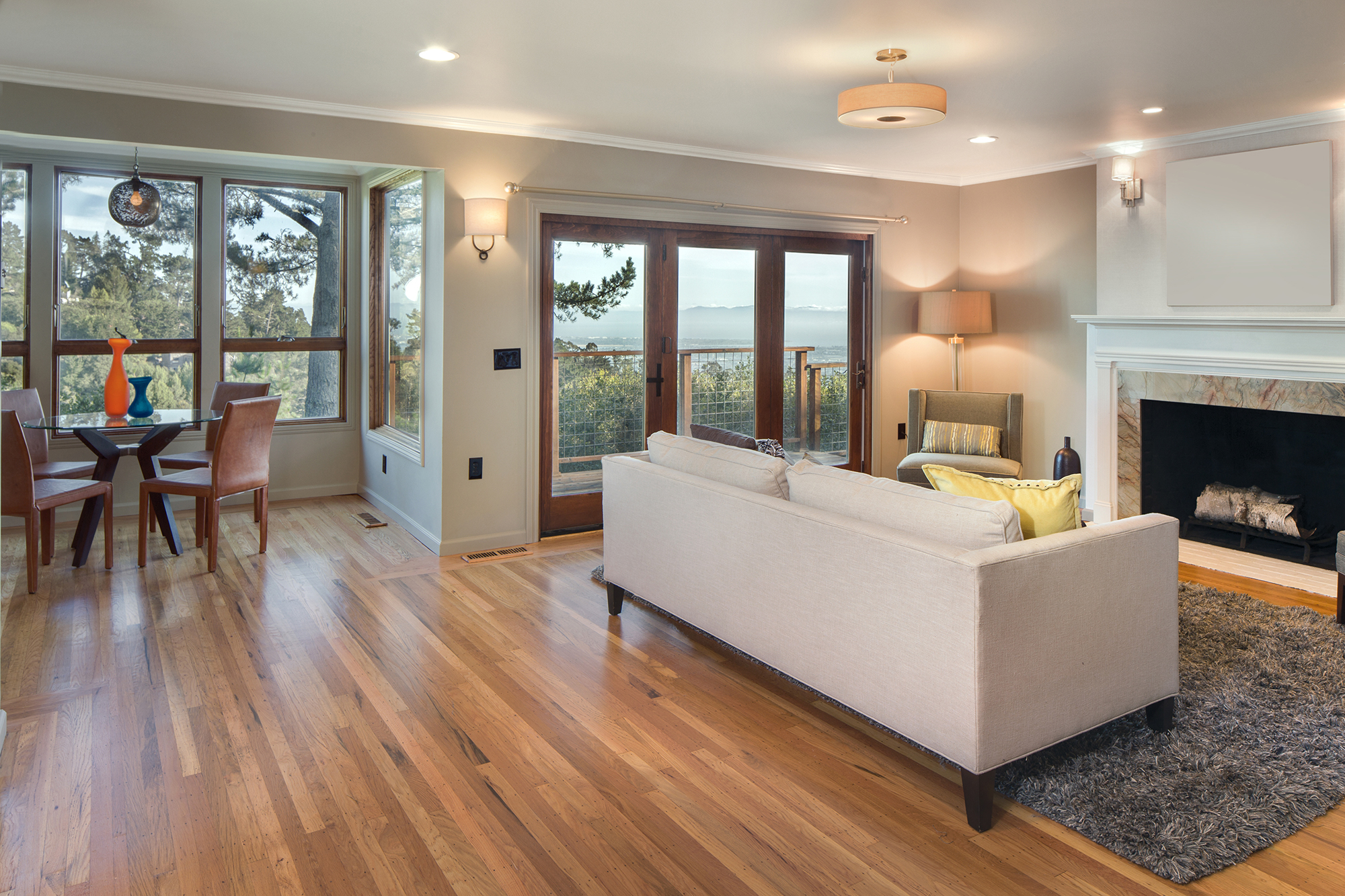
Warm minimalism is the antidote to cold grays and sterile “all-white everything.” It’s also one of the fastest ways to make smaller rooms feel calmer, brighter, and more expensive without adding clutter. The catch: the floor does most of the visual work. At Main Line Hardwood (visit us at Devon, PA), we help homeowners choose warm, modern hardwood and LVP palettes that expand a room visually, not just stylistically.
The warm minimalism formula (technical, not vibes)
Warm minimalism relies on controlled contrast and stable undertones:
Warm undertones: beige, honey, soft amber, light brown
Low-to-medium visual noise: consistent grain, fewer high-contrast knots
Light management: finishes and plank widths that reflect light without looking glossy
If your floor has the wrong undertone, the room shrinks: pink undertones can fight warm whites, and heavy red/orange can “close in” a space.
Step 1: Pick undertones that don’t turn weird under your lighting
Lighting is the silent editor of wood tone. A floor that looks “warm neutral” in a showroom can shift at home depending on Kelvin temperature and daylight direction.
North-facing rooms (cooler daylight): choose warmer beige/tan undertones to avoid flatness.
South-facing rooms (strong warm light): avoid overly amber stains that go orange; choose a balanced white oak tone.
LED lighting: 2700K reads warmer; 3000–3500K reads more neutral. Your floor tone should be chosen alongside your bulb plan.
Hot take: “White oak” isn’t automatically safe. The finish system and stain chemistry decide whether it reads creamy, green-gray, or pinkish.
Step 2: Choose plank width based on room geometry (not trend boards)
Wide plank looks luxe, but it can also dominate a small room if the layout isn’t right.
Small rooms (under ~120 sq ft):
Hardwood: 4"–6" often looks proportionate and keeps the pattern calm.
LVP: 5"–7" can look modern without overwhelming.
Long narrow rooms: consider moderate widths to reduce “runway” effect.
Open concept: wider planks can work if your wall colors and furniture stay low-contrast.
Hot take: Ultra-wide planks can make a small room feel smaller if the grain has heavy contrast. Width amplifies contrast.
Step 3: Reduce bevel drama if you want “bigger”
Bevels create shadow lines. Shadow lines visually segment the floor, which can shrink a space.
For a “bigger room” effect: choose micro-bevel or square-edge looks (where feasible).
For texture-driven style: a bevel can look great, but keep it subtle and pair with lighter tones.
Step 4: Sheen level is a space-perception tool
Matte: hides micro-scratches and keeps glare low, but can mute light bounce in dim rooms.
Satin: the sweet spot for warm minimalism, reflects enough light to lift a small space without screaming “shine.”
Gloss/semi-gloss: can enlarge visually through reflection but highlights every speck and swirl, especially in small high-traffic areas.
Step 5: Grain and grade selection, explained like an installer
Select/Prime grade: fewer knots, more consistent visuals; best for calm minimalism.
Character grade: knotty, higher contrast; cozy, but visually “busier,” which can make tight rooms feel crowded.
If you love character, balance it: choose a lighter stain and a medium width to control visual noise.
Layout tricks that genuinely change perception
Plank direction: running planks parallel to the longest wall usually elongates the room.
Continuous runs: fewer transitions between spaces reduces visual chopping.
Tone continuity: match adjacent spaces to avoid “checkerboard” effect.
Hardwood vs LVP for warm minimalism (practical reality)
Choose hardwood if you want natural depth and future refinishing.
Choose LVP if you need high moisture tolerance (mudroom, basement-adjacent areas) and want a consistent modern look.
Warm minimalism is won or lost at the undertone level: pick stable warm neutrals, control bevel and contrast, and choose plank widths that fit your room’s scale. If you want help selecting a floor that makes your space feel bigger and calmer under your exact lighting, contact Main Line Hardwood or visit us at Devon, PA. We serve Montgomery County, PA, Chester County, PA, Philadelphia, PA, Delaware County, PA, and Bucks County, PA and can help you build a warm, modern foundation that stays timeless.


