

Attached Pad Changes the Whole Answer
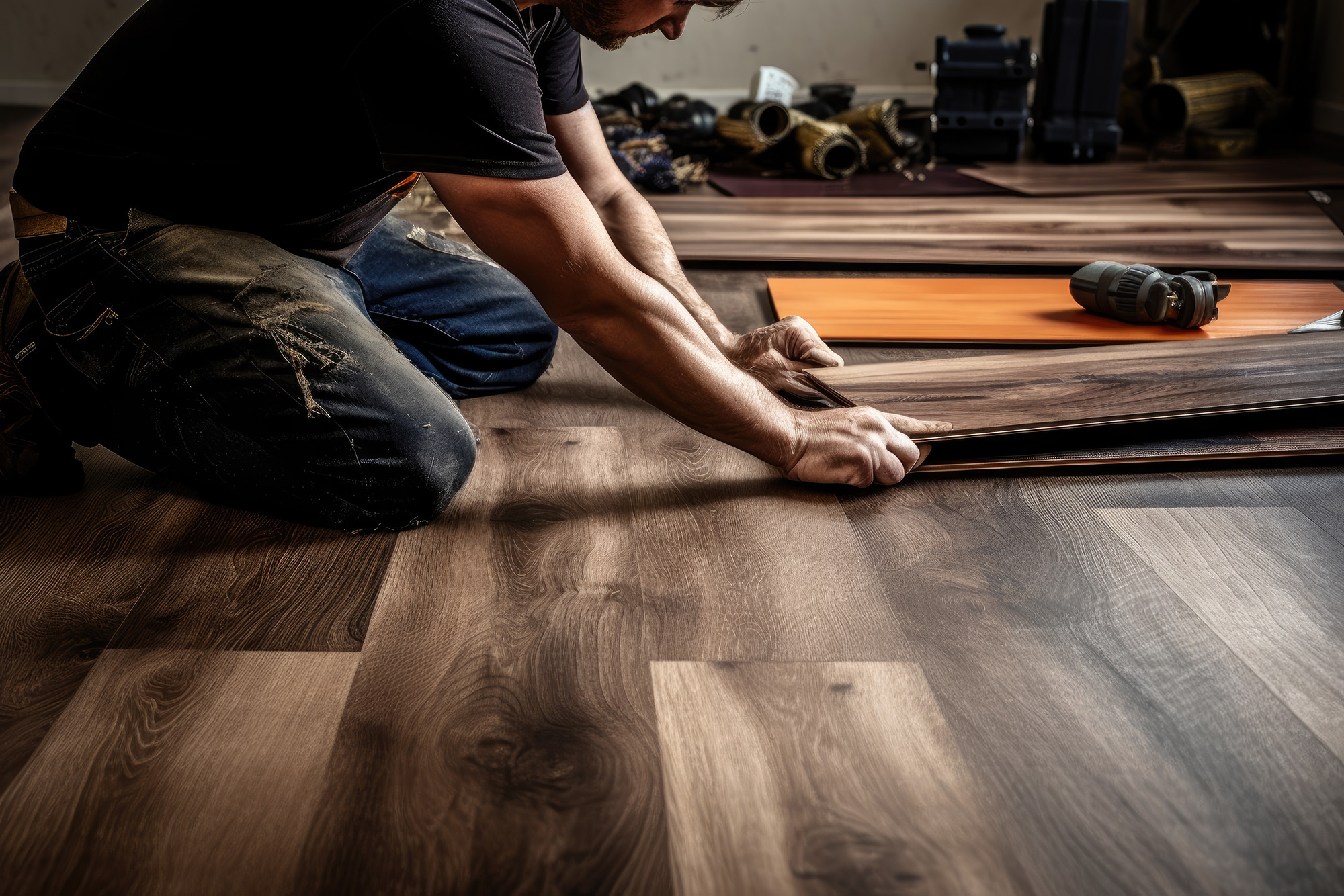
A large share of LVP sold today ships with an underlayment pad already bonded to the underside of each plank, usually a thin layer of foam or cork. If a product has this attached pad, the manufacturer has already engineered the cushioning, the sound dampening, and the thickness tolerance of the locking system around it. Checking whether your product has one is the single most useful thing to establish before anyone starts talking about underlayment at all.
This matters because adding a separate underlayment beneath a plank that already has an attached pad is one of the more common installation mistakes, and it causes a specific, avoidable failure. Click lock joints are designed to sit within a narrow range of vertical movement. Too much cushion underneath lets the planks flex each time someone walks across them, and that repeated flexing works the locking joints loose over time, producing gaps and separation that look like a product defect but are actually a stacking problem.
When Separate Underlayment Genuinely Helps
If a product does not have an attached pad, a separate underlayment usually earns its place, particularly over a wood subfloor or in a room where sound transmission matters. It smooths out very minor subfloor imperfections, takes some of the hollow sound out of a floating floor, and adds a small amount of comfort underfoot. Rooms above a finished basement or a lower living space are the clearest candidates, since the sound difference between a floor with and without acoustic underlayment is noticeable.
The important detail is that the underlayment should be the type the manufacturer specifies rather than whatever is on the shelf. Manufacturers test their locking systems against particular underlayment densities and thicknesses, and warranty language frequently names what is acceptable. A thick, soft carpet style pad underneath LVP creates the same joint flexing problem described above, even on a product with no attached pad.
Underlayment and Vapour Barriers Are Not the Same Thing
These two get conflated constantly, and the confusion causes real problems in below grade rooms. Underlayment is about cushioning, sound, and minor smoothing. A vapour barrier is about stopping moisture that migrates up through a concrete slab from reaching the back of the flooring. They serve different purposes, and having one does not mean you have the other.
Over concrete, a moisture barrier is generally necessary regardless of what the underlayment situation is, because concrete releases moisture over its whole life rather than only when it is new. Some underlayment products include an integrated moisture barrier, which is convenient but worth confirming rather than assuming. On a wood subfloor over a ventilated crawl space, the requirements are different again, which is why the subfloor type needs establishing before this question can be answered properly.
Glue Down and Radiant Heat Are Separate Cases
Glue down LVP is the clearest exception to the whole conversation. Because the planks bond directly to the subfloor, there is no floating layer to cushion and no locking joint to protect, so underlayment is generally not part of a glue down installation at all. What matters instead is subfloor flatness and the correct adhesive, since the plank is going to take the shape of whatever it is stuck to.
Radiant floor heat is the other case where the usual logic reverses. Underlayment insulates, and insulation between a heating system and the room is working against the system you paid for. Where radiant heat is involved, either a very thin specified underlayment or none at all is typically the right answer, and the manufacturer's radiant heat guidance should be the deciding voice rather than a general rule of thumb.
The Question Worth Asking Your Installer
Rather than asking whether you need underlayment, ask what is going directly beneath the planks and why. A good answer will cover whether the product has an attached pad, what the subfloor is, whether moisture needs managing, and what the manufacturer specifies. If any of those four pieces is missing, the plan has not been thought through yet.
It is also worth asking to see the manufacturer's installation guidance in writing, since that document is what a warranty claim will eventually be measured against if anything goes wrong years later.
If you are planning an LVP installation and want the underlayment question answered properly for your subfloor, our team can help anywhere across Montgomery County, PA, Chester County, PA, Philadelphia, PA, Delaware County, PA, and Bucks County, PA. Visit us at one of Devon, PA or contact us to talk through your project. Browse our luxury vinyl plank options to see what comes with an attached pad.


