

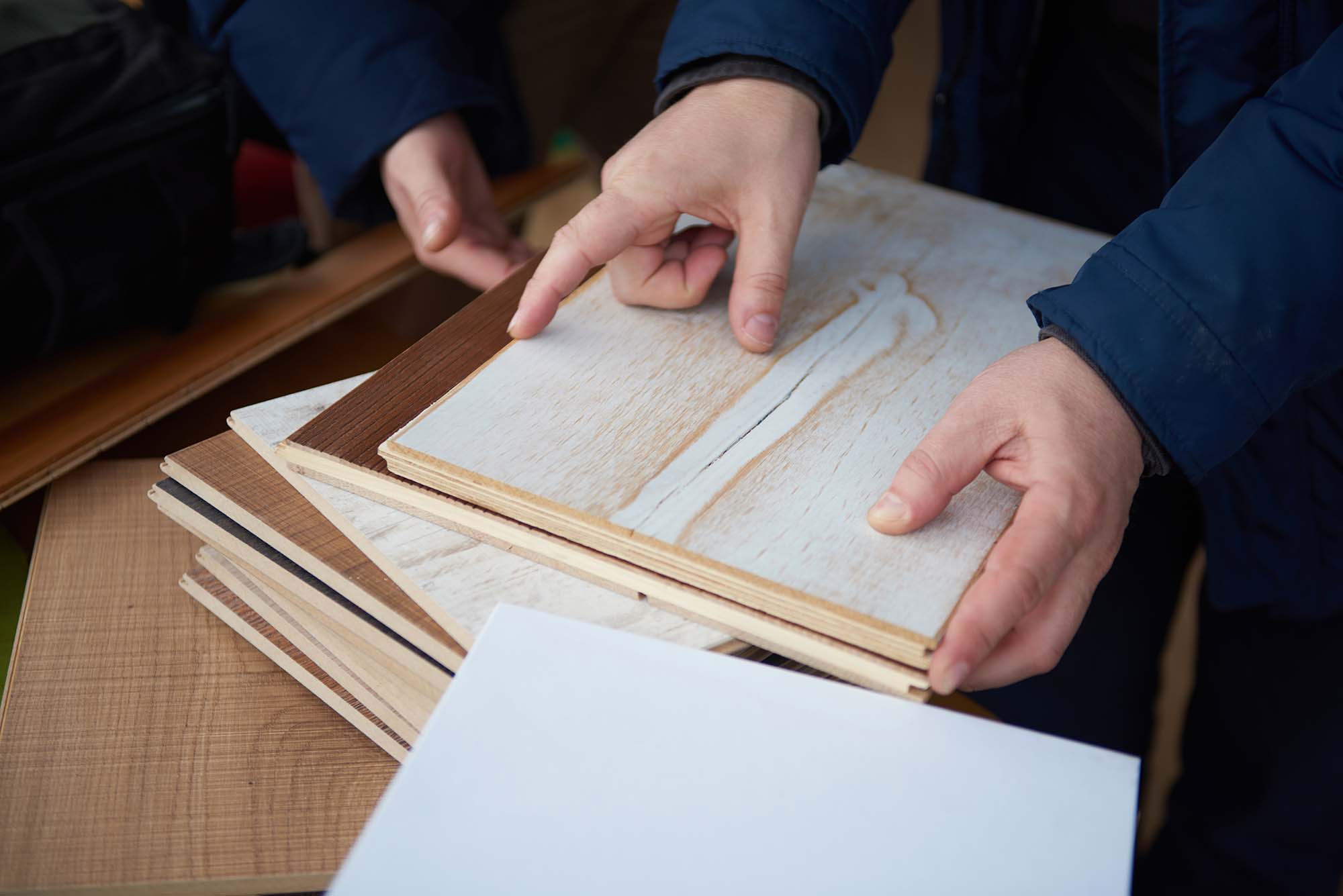
Installing LVP over existing hardwood can be a smart shortcut, or an expensive redo.
Homeowners often choose it to avoid sanding mess, reduce timeline, or change the look quickly. But LVP is unforgiving about flatness, movement, and moisture, and hardwood floors were not built with LVP tolerances in mind.
The First Rule: LVP Doesn’t “Fix” a Bad Floor
LVP follows the surface under it.
If hardwood has cupping, crowning, loose boards, or squeaks caused by subfloor movement, the LVP will telegraph problems as hollow spots, clicks, separation, or joint failure.
Floating floors need a stable, flat platform. Hardwood can be stable, but only if it is mechanically sound and reasonably flat.
When Installing LVP Over Hardwood Is Actually Smart
It can make sense when the hardwood is structurally solid but cosmetically undesirable.
Examples include floors with stubborn stain variation, patched areas that don’t match, or finish wear that the homeowner doesn’t want to refinish again.
It’s also practical when the hardwood is thin, already refinished multiple times, and you want a new surface without risking sanding through the wear layer. Another “smart” case is when you can maintain proper height clearances at doors and transitions without creating tripping hazards.
The Technical Pass/Fail Checks
Flatness is the big one.
Most LVP manufacturers require tight flatness tolerances over a given span. If the hardwood has waves or edges that create high spots, click-lock joints can be stressed and pop over time.
Next is deflection and movement. Any bounce or flex in the hardwood or subfloor can fatigue the locking system.
Moisture matters too. If the hardwood is over a damp basement or slab-adjacent area with seasonal humidity swings, you need a moisture plan that matches the LVP system, including the correct vapor barrier where required.
The Height Problem Nobody Thinks About Until It’s Too Late
LVP over hardwood adds thickness, plus underlayment if used.
That can cause doors to rub, reduce clearance for appliances, and create awkward transitions to tile or carpet. Stairs are especially tricky because riser height consistency matters for safety.
If you’re changing floor height, plan transitions at doorways and consider how baseboards and shoe molding will be handled so the result looks intentional, not layered.
When It’s a Mistake
If the hardwood is cupped or crowned, LVP over it is usually a gamble.
If the hardwood is loose or has widespread squeaks, you must correct fastening and subfloor issues first. Otherwise the movement continues and the LVP locking edges take the stress.
If the hardwood has thick wax/polish buildup, it can affect underlayment friction and stability, and it’s a warning sign that the surface may be uneven or contaminated.
If the home has direct sun exposure on large spans, heat load can expand the LVP and cause peaking if expansion gaps are wrong. Hardwood beneath doesn’t prevent that.
Better Alternatives That Sometimes Cost Less Long-Term
To refinish hardwood or install LVP? Refinishing may be the better investment if the hardwood is high quality and has enough wear layer remaining.
A screen and recoat can restore protection if the floor isn’t through to bare wood, and it avoids the height and transition complications. If you want a different look, stain and finish system selection can often get you there without covering the floor.
The Bottom Line
Yes, you can install LVP over hardwood, but only when the hardwood is flat enough, stable enough, and dry enough. The best installs are the ones where prep is treated like the main event, not an afterthought.
If you’re in Montgomery County, PA, Chester County, PA, Philadelphia, PA, Delaware County, PA, and Bucks County, PA and considering LVP over hardwood, contact us at Main Line Hardwood or visit us at Devon, PA to review product options and get a site-specific recommendation.


