

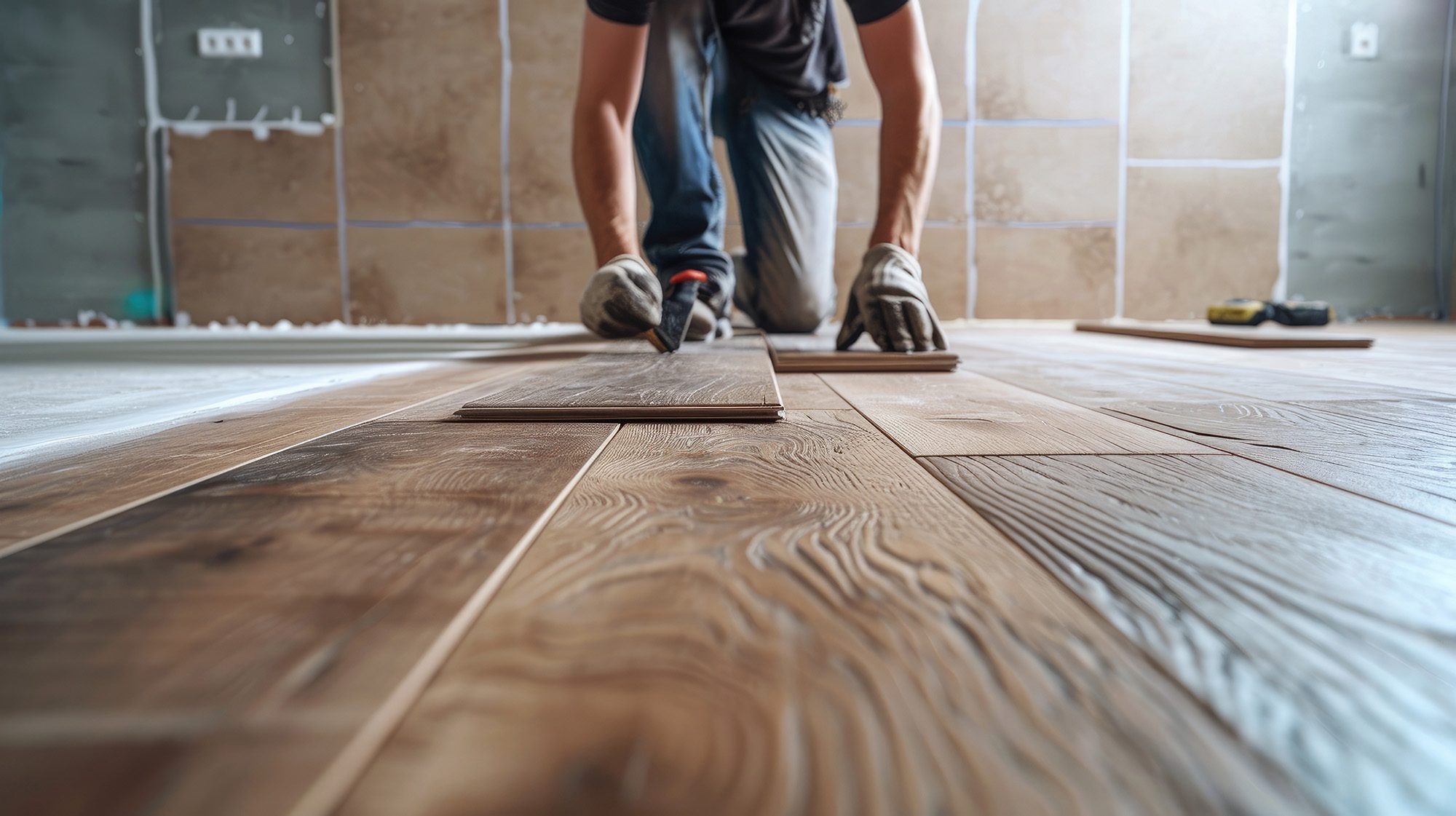
Hardwood flooring over concrete is one of the most misunderstood topics in residential flooring—and also one of the most expensive places to make a mistake. At Main Line Hardwood, this is a question we hear constantly from homeowners touring our Devon, PA, especially those with basements, condos, split-level homes, or slab-on-grade construction.
The short answer: yes, hardwood can be installed over concrete—but only under very specific technical conditions. Miss one step, and failure isn’t a possibility; it’s a timeline.
Why Concrete Is a Risky Substrate for Hardwood
Concrete looks solid, but it’s porous. It continuously releases moisture vapor, even when it appears dry. Hardwood—being hygroscopic—absorbs and releases moisture based on its environment. When wood pulls moisture from a concrete slab, it expands, cups, or delaminates.
This is why solid hardwood is almost never recommended directly over concrete, while engineered hardwood—when installed correctly—can perform exceptionally well.
Moisture Testing: The Step Most Installers Skip
Before installation, professional-grade moisture testing must be done using calcium chloride tests, relative humidity (RH) probes, or both. Surface readings are useless here.
Acceptable moisture levels depend on:
The engineered hardwood’s core construction
Adhesive specifications
Local climate conditions
At Main Line Hardwood, slab moisture testing determines not just product choice, but installation method. Skipping this step is the #1 cause of hardwood floor failure over concrete.
The Only Three Safe Installation Methods Over Concrete
1. Glue-Down Engineered Hardwood
This is the most common and most stable option. It uses moisture-rated urethane adhesives that act as both a bond and a vapor barrier. The adhesive selection must match:
Veneer thickness
Plank width
Slab moisture readings
Cheap adhesives lead to hollow sounds, bond failure, or adhesive breakdown.
2. Floating Engineered Hardwood (With Limitations)
Floating floors require:
Precision-milled locking systems
High-density underlayments with vapor barriers
Strict plank-width limitations
Wide planks over 7 inches often fail when floated over concrete due to lateral movement stress.
3. Sleeper Systems (Rare, Costly, Risky)
Installing plywood sleepers over concrete to nail down solid hardwood is technically possible—but rarely recommended today due to:
Height loss
Trapped moisture risks
Increased failure points
Why Engineered Hardwood Works Where Solid Doesn’t
Engineered hardwood uses cross-layered plywood or HDF cores that limit dimensional movement. This structure resists moisture-driven expansion and contraction—critical over concrete slabs.
However, not all engineered hardwood is equal. Veneer thickness, core composition, and plank geometry determine long-term success.
The Bottom Line
Installing hardwood over concrete is not a DIY-friendly decision. It’s a systems-based installation that depends on testing, material science, and expert execution.
If you’re considering hardwood over concrete in your home, visit Main Line Hardwood at one of our Devon, PA or schedule a consultation today. We serve homeowners across Montgomery County, PA, Chester County, PA, Philadelphia, PA, Delaware County, PA, and Bucks County, PA and specialize in engineered hardwood systems built to last—not fail quietly.


