

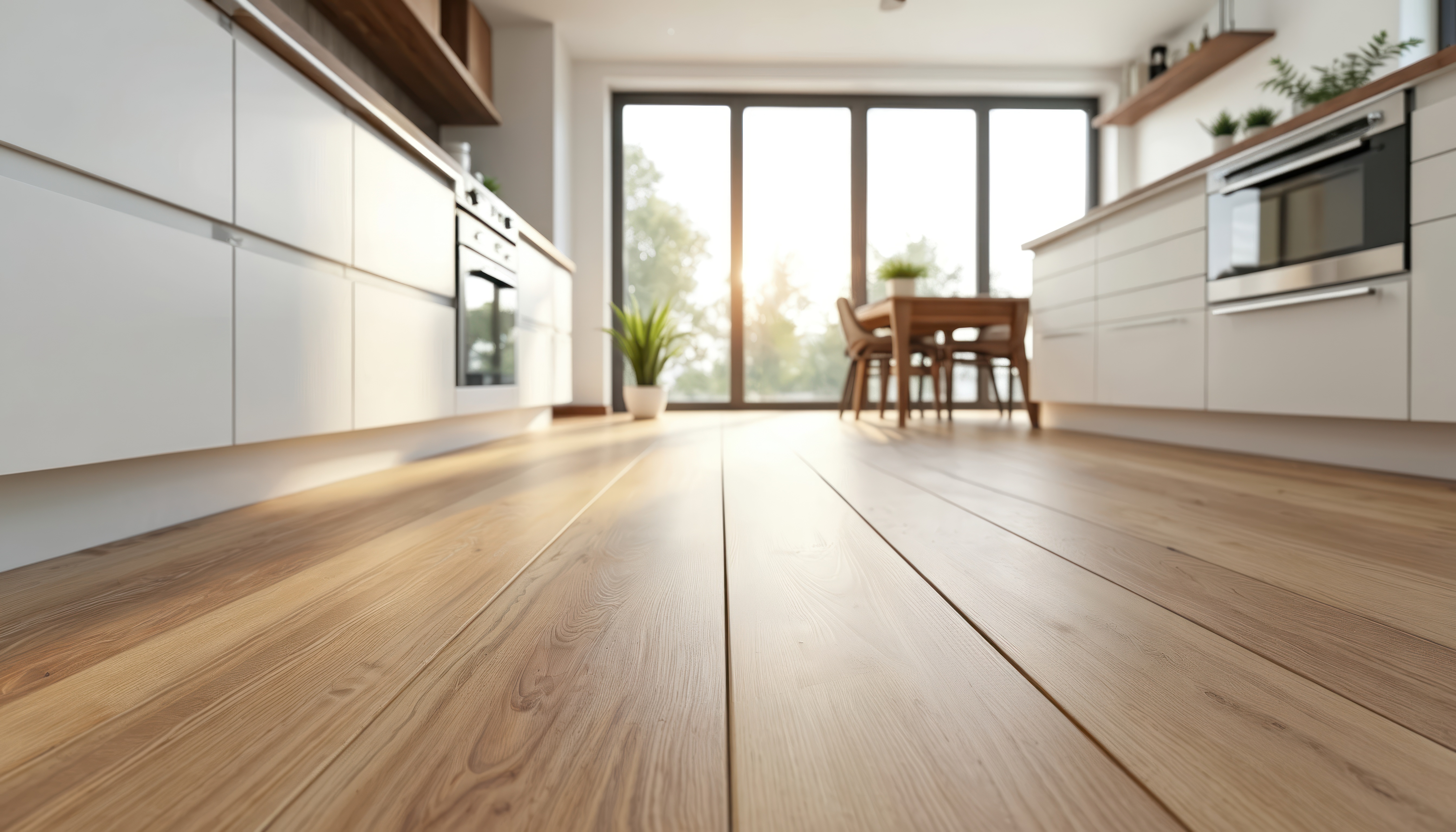
Hardwood refinishing is one of the best ways to bring original floors back to life, especially in older Main Line homes where the flooring may be part of the home’s character. But not every hardwood floor can be sanded again. At some point, the wear layer becomes too thin, the fasteners sit too close to the surface, or previous refinishing work has removed more material than expected.
That does not always mean the floor has failed. It means the floor needs a more careful assessment before anyone brings in a drum sander. For homeowners comparing refinishing, recoating, repair, or replacement, the smartest first step is understanding what your floor can physically handle.
Why hardwood thickness matters before refinishing
Traditional solid hardwood can usually be refinished multiple times because the plank has usable wood above the tongue-and-groove joint. Each full sanding removes a small amount of material, but heavy scratches, deep stains, uneven boards, or aggressive past sanding can increase how much needs to come off.
Once the top layer gets too thin, sanding can expose nails, weaken board edges, or break through the groove area. That is when refinishing moves from a cosmetic upgrade into a structural risk. A skilled flooring professional will look at board profile, previous sanding marks, exposed fasteners, gaps, cupping, and floor movement before recommending a full refinish.
Signs your floor may be too thin
The most obvious warning sign is visible nail heads or fasteners appearing along board edges or in high-traffic paths. You may also notice splintering at board seams, cracking near the tongue, or areas where the floor feels unusually sharp, brittle, or uneven underfoot.
Another clue is how flat the floor looks between rooms. If some boards appear slightly dished, wavy, or lower than adjacent thresholds, the floor may have already been sanded heavily. Older homes in Devon, Wayne, Bryn Mawr, and surrounding Main Line areas often have original hardwood that looks strong from above but has a limited sanding life left underneath.
Refinishing is not the only option
If the floor is too thin for a full sand, a screen and recoat may still be possible. This process lightly abrades the existing finish rather than removing the surface down to raw wood. It is useful when the floor has dullness, minor surface scratching, or finish wear but does not need deep stain removal.
Spot repair may also work if only a few boards are damaged. Individual plank replacement, stain blending, and finish matching can preserve the majority of the original floor while correcting isolated trouble areas. This is where experience matters, because a technically possible repair still needs to look natural in the room.
When replacement becomes the better decision
Replacement may be the smarter investment when the hardwood has deep pet stains, widespread water damage, excessive movement, or too little remaining wood for sanding. It may also make sense if multiple rooms have been patched over time and the floor no longer has a consistent look.
For some homeowners, engineered hardwood or luxury vinyl plank can solve a specific lifestyle issue better than another round of refinishing. A busy mudroom, basement, rental space, or moisture-prone area may need a different flooring system entirely. The goal is not to save the old floor at all costs, but to choose the option that performs best in that part of the home.
What a professional assessment should include
A proper refinishing assessment should go beyond a quick visual opinion. The contractor should inspect floor thickness where possible, look for exposed fasteners, evaluate stains, check loose boards, identify previous coating types, and explain whether sanding, recoating, repairs, or replacement makes the most sense.
Homeowners should also ask how much sanding is expected, what finish system will be used, and whether the floor can support the desired stain color. Darker stains, for example, often require more even sanding and can reveal imperfections that a natural finish may hide.
If you are unsure whether your hardwood floors are too thin to refinish, Main Line Hardwood can help you make the decision with a practical, floor-by-floor assessment. Visit Devon, PA to compare hardwood options, finish looks, and replacement alternatives in person.
Main Line Hardwood serves Montgomery County, PA, Chester County, PA, Philadelphia, PA, Delaware County, PA, and Bucks County, PA with hardwood refinishing, repair, replacement, and flooring guidance for homes that need more than a surface-level answer. For help deciding what your floors can handle next, contact us to schedule a consultation.


